

You cleaned the shelves. You threw out expired food. You wiped every interior surface with a baking soda solution and left the fridge looking spotless. Yet somehow, within a few days, the unpleasant odor returned. If this sounds familiar, the issue is likely much deeper than a simple cleaning problem. Persistent refrigerator odors are often caused by hidden moisture, clogged drain lines, mold growth, bacteria buildup, or cooling system issues that exist behind panels and components homeowners rarely inspect.
These problems can continue producing odors even when the visible interior appears clean. At Home Appliance Care, our experienced technicians frequently diagnose refrigerator smells that originate from drain pans, evaporator compartments, and other concealed areas. Understanding the true source of the odor is the first step toward restoring a fresh, hygienic, and properly functioning refrigerator.
1. The Drain Pan Underneath the Refrigerator
This is the most commonly overlooked source of fridge odors, and in our experience at Home Appliance Care, it is also the most frequent culprit. Every refrigerator has a drain pan, a shallow tray that collects water from the automatic defrost cycle. This water is supposed to evaporate from the pan over time using heat from the compressor.
Over months and years, the pan accumulates a residue of organic material, mold, and bacteria. In humid climates like those across DC, Maryland, and Virginia, evaporation may not fully keep up with accumulation, leaving standing water in the pan for extended periods.
Pull your fridge away from the wall and locate the drain pan near the bottom. Remove it carefully, the contents may be unpleasant, and wash it thoroughly with hot soapy water. This single step resolves persistent refrigerator odors in a significant number of cases.
2. The Defrost Drain Is Clogged
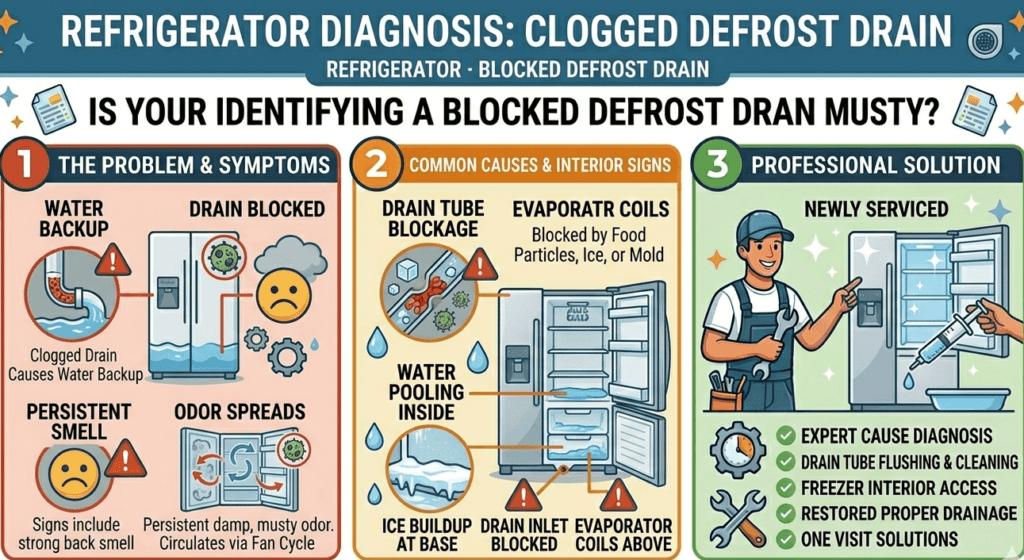
The defrost drain carries meltwater from the evaporator coils down to the drain pan. When this drain becomes blocked with food particles, ice, or mold, water backs up into the freezer compartment. The standing water creates a persistent damp, musty smell that circulates through both the freezer and fridge sections with every fan cycle.
Signs of a clogged defrost drain include water pooling inside the refrigerator or freezer, ice buildup at the base of the freezer, or a smell that is particularly strong near the back of the appliance.
Clearing a blocked defrost drain requires accessing the drain tube and flushing it with warm water. In many refrigerators this means partially disassembling the freezer interior, a job for a technician.
3. The Door Gaskets Harbor Mold
The rubber gaskets that seal the fridge and freezer doors have deep folds that trap moisture and food particles after every opening and closing. These folds create a dark, humid environment where mold and mildew grow readily.
Pull back the folds of the door gasket on both doors and inspect closely. Black, green, or brownish discoloration is mold. Clean thoroughly with a mixture of warm water and white vinegar applied with an old toothbrush, working into every fold.
If the gasket is severely deteriorated or has cracks where mold has penetrated the material itself, replacement is more effective than continued cleaning.
4. Food Residue Behind the Crisper Drawers
The channels and grooves that the crisper drawers slide into are almost never cleaned. Spilled juice, water from vegetables, and food particles accumulate in these tracks and decompose slowly. Remove the drawers completely and clean the entire channel area with a damp cloth. Check underneath and behind the drawers as well.
5. The Condenser Coils Have Heavy Buildup
In rare cases, heavily soiled condenser coils can produce a burning or musty smell as the compressor heats them during operation. This is more common in homes with pets, where hair and dander accumulate densely on the coils. Vacuum the coils thoroughly and allow the refrigerator to run for a few hours before evaluating whether the smell persists.
6. A Cooling System Problem Is Causing Warm Zones
If the smell is specifically sour or like spoiled food and you cannot trace it to any visible contamination, a cooling problem may be the real issue. A refrigerator that has warm zones due to a failing evaporator fan, defrost system problem, or weakening compressor may be allowing food to partially spoil without obvious visible signs.
Check the temperature in different areas of your refrigerator with a thermometer. If readings vary significantly or any area is consistently above 40°F, the smell may be the result of a cooling problem rather than a hygiene issue.
Ready to schedule a repair? Contact Home Appliance Care today. We serve the entire DMV area (DC, Maryland & Virginia). Call us at (571) 206-1560 for fast, same-day appliance repair.