












Range Oven Repair in Northern Virginia & Maryland 

Is your oven not heating or baking unevenly? We diagnose and repair all range oven issues fast so Virginia families can get back to cooking.

About

Don’t Let a Broken Oven Ruin Dinner – We Fix It Fast

When a range or oven stops working properly, it usually disrupts one of the most important parts of the home, daily cooking. For many households, especially long-term homeowners aged 50 and above, a reliable oven is not optional; it is essential. 

At Home Appliance Care, we provide careful and dependable Range Oven Repair services across Northern Virginia and Southern Maryland. Our goal is to restore safe, stable cooking performance without confusion, pressure, or unnecessary replacement recommendations. 

We specialize in diagnosing both gas and electric ovens, including issues like uneven heating, burners not igniting, ovens not turning on, and temperature inconsistency. Every repair begins with a clear understanding of what is actually failing inside the appliance. 

Our technicians work with most major kitchen appliance systems and focus on long-term safety, not temporary fixes. 

Outcomes

Quick Understanding: What Homeowners Usually Experience

Most requests for Range Oven Repair fall into a few predictable patterns. These issues often appear suddenly, even if the appliance worked fine the day before. 

~50%

faster appliance

repairs

Our industry-trained technicians diagnose and fix issues 50% faster — so your appliance is back to normal the same day.

~70%

fewer second

visits

We carry most replacement parts in our vans, eliminating 70% of second visits and getting your appliance fixed in a single appointment.

“It’s important for us that we help return household functionality back to normal quickly.”

Team Home Appliance Care

This is one of the most common service calls. The oven powers on, but the food does not cook correctly or takes much longer than usual. 

Typical causes include: 

  • Heating element weakening 
  • Igniter delay (gas ovens) 
  • Temperature sensor malfunction 

This issue is often classified as Oven Not Heating Repair, and it accounts for a large portion of residential service requests. 

When burners fail, cooking becomes partially or completely unusable. 

Common reasons: 

  • Ignition system failure 
  • Gas valve restriction 
  • Electrical connection fault 

This is a key part of Range Oven Repair service calls and often appears alongside oven heating issues. 

If the oven does not power up at all, the issue is usually electrical. 

Possible causes: 

  • Circuit breaker trip 
  • Internal fuse failure 
  • Control board malfunction 

This type of failure is often mistaken for major damage but is frequently repairable. 

Why Do These Problems Happen? ​

A range or oven is built around controlled heat generation. When any part of that system weakens, performance becomes inconsistent. 

The main functional systems include: 

  • Heating system (element or gas igniter) 
  • Temperature control system 
  • Electrical supply system 
  • Burner ignition system 

When one of these systems fails, you may experience Oven Temperature Not Working or inconsistent cooking results. 

We provide Range Oven Repair in Northern Virginia and Southern Maryland, supporting homeowners who need in-home service rather than appliance transport. 

This includes: 

  • Residential homes 
  • Older kitchen appliance systems 
  • Built-in ovens and freestanding ranges 
  • Gas and electric cooking systems 

Local availability matters because Range Oven Repair near me searches often prioritize immediate service access. 

PROBLEMS

Common Range Oven Problems We Repair

Most range oven repair requests fall into repeatable mechanical and electrical failure patterns. Understanding these helps explain why the appliance stops working and whether it can be repaired safely. 

Oven Not Heating Repair

When homeowners report oven not heating repair, the oven typically powers on normally but fails to generate usable heat.


Main causes include: 

  • Heating element failure (electric ovens) 
  • Igniter malfunction (gas ovens) 
  • Broken temperature sensor 
  • Weak electrical relay connection 

In electric systems, the heating element may still glow but not reach required cooking temperature. In gas systems, the igniter may fail to open the gas valve fully. 


This is one of the most frequent range oven repair service categories and is usually repairable without replacing the entire unit. 

Range Burner Not Working (Cooktop Failure Pattern)

A second major category of range oven repair involves burners failing to ignite or heat properly. 


Typical symptoms: 

  • Burner clicks but does not light 
  • Uneven flame on gas burners 
  • Electric coil not heating 
  • Delayed ignition response 

Common causes: 

  • Burner ignition system wear 
  • Gas flow restriction 
  • Faulty burner valve 
  • Electrical connection interruption 

This issue often appears alongside oven not heating repair, especially in older kitchen ranges where both systems share electrical components. 

Oven Temperature Not Working

When homeowners notice inconsistent cooking, this is often categorized as oven temperature not working. 


What it feels like: 

  • Food burns on one side 
  • Undercooked center despite correct settings 
  • Oven cycles heat unpredictably 

Root causes: 

  • Faulty thermostat calibration 
  • Temperature sensor drift 
  • Control board miscommunication 
  • Air circulation imbalance inside the oven cavity 

This type of failure is subtle but critical because it affects cooking accuracy without fully disabling the appliance. 


It is a core diagnostic area in range oven repair services because it often goes unnoticed until food quality becomes consistently poor. 

Oven Not Turning On

If an oven does not turn on at all, the issue is usually electrical rather than mechanical.


Common causes: 

  • Tripped circuit breaker 
  • Internal fuse failure 
  • Damaged power supply line 
  • Control board malfunction 

Unlike heating issues, this category of range oven repair requires full electrical diagnostics before repair begins. 


In many cases, the appliance can be restored without part replacement if the issue is external power interruption. 

Oven Igniter Replacement

Gas ovens rely heavily on igniters to function safely. 


When igniters fail: 

  • Oven takes too long to light 
  • Gas smell appears without ignition 
  • Oven does not heat even though gas is present 

This leads to oven igniter replacement, one of the most common repair procedures in 

gas-based range oven repair systems. 


Why it happens: 

  • Natural wear over time 
  • Heat fatigue from repeated cycles 
  • Electrical resistance increase in igniter component 

Igniter degradation is gradual, meaning homeowners often notice slower performance before complete failure. 

Heating Element Failure

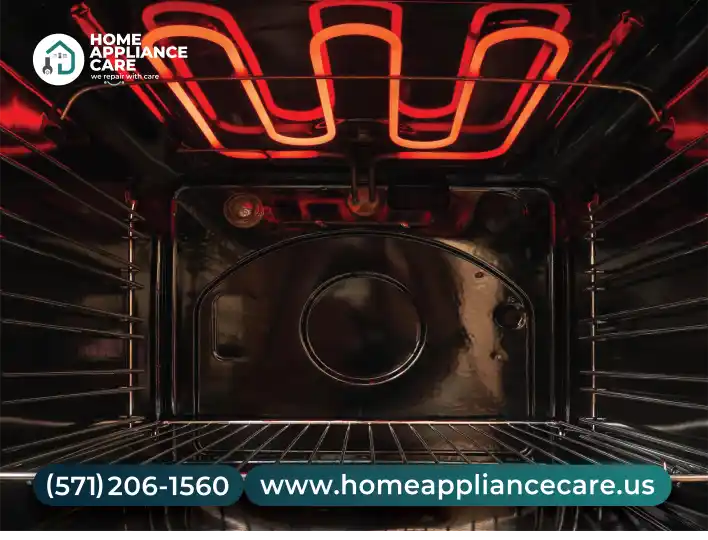
Electric ovens depend on heating elements located at the top and bottom of the oven cavity. 


Symptoms of failure: 

  • Oven turns on but stays cold 
  • Uneven heating during cooking 
  • Element visibly damaged or broken 

Causes: 

  • Thermal stress over time 
  • Voltage fluctuations 
  • Internal coil burnout 

This falls under oven heating element repair, which is one of the most straightforward range oven repair procedures when caught early. 

Differences

Gas Vs Electric Oven Differences

Understanding the system type is essential in range oven repair because gas and electric ovens fail differently.

Gas Oven Systems

Gas ovens rely on:

  • Igniters
  • Gas valves
  • Safety regulators

Common issues:

  • Igniter failure
  • Gas flow disruption
  • Delayed ignition cycles

Gas systems often require safety-first diagnostics due to combustion involvement.

Electric Oven Systems

Electric ovens rely on: 

  • Heating elements 
  • Control boards 
  • Electrical relays 

Common issues: 

  • Element burnout 
  • Wiring faults 
  • Sensor misreading 

Electric ovens typically fail silently without visible warning signs.

DETECTION

Common Early Warning Signs

Before a full breakdown, ovens often show early symptoms: 

Food cooking unevenly
Oven taking longer to preheat
Burner ignition delay
Clicking sounds without ignition
Temperature drifting up or down

If ignored, problems may lead to: 

  • Complete heating failure 
  • Unsafe gas ignition behavior 
  • Electrical short circuits 
  • Uneven cooking that affects food safety 

Early range pven repair prevents larger system damage and reduces long-term cost.

Reviews

What Our Clients Say

We’re trusted across Fairfax, Loudoun, Prince William, Stafford, Woodbridge, and nearby Maryland communities.

Our stack

OUR REPAIR PROCESS

What Happens During Diagnostic Inspection

A structured inspection is essential for accurate range oven repair. 

Step 01
Power system check

We verify electrical or gas supply integrity. 

Step 02
Heating system testing

We test heating elements or igniters for response. 

Step 03
Sensor evaluation

We check temperature accuracy and control feedback. 

Step 04
Burner system check

We test ignition and flame consistency. 

Step 05
Safety verification

Every job comes with a service guarantee for your peace of mind.

Prefer to talk to a technician first?

Zones

Areas We Service

Home Appliance Care provides in-home range oven repair across Northern Virginia, Southern Maryland, and Washington DC. Our full service area by location and zip code:

View Full List of Service Areas & ZIP Codes
CountyCity / AreaZIP Codes
Fairfax County, VAAlexandria22301, 22303, 22304, 22306, 22307, 22308, 22309, 22310, 22312, 22314, 22315
Annandale22003
Arlington22201, 22202, 22203, 22204, 22205, 22206, 22207, 22209, 22213
Burke22015
Fairfax22030, 22031, 22032
Fairfax Station22039
Falls Church22041, 22042, 22043, 22044, 22046
Lorton22079
McLean22101, 22102
Springfield22150, 22151, 22152, 22153
Prince William County, VAWoodbridge22191, 22192, 22193, 22194, 22195
Manassas20109, 20110, 20111, 20112
MarylandSouthern Maryland20744, 20745, 20748, 20735, 20601, 20602

FAQ

Common Questions

Everything you need to know before we start working together.

Why is my oven not heating even though it turns on?

A working oven that does not heat is usually caused by a failed heating element in electric ovens, a weak or broken igniter in gas ovens, or a faulty temperature sensor. The appliance receives power but cannot generate or regulate heat. 

When should I call a professional for oven repair?

You should call a professional when the oven stops heating, shows inconsistent temperature, fails to turn on, or has gas ignition issues. These symptoms usually indicate internal component failure requiring inspection. Learn more guides here. 

Why does my oven take too long to preheat?

Slow preheating is usually caused by a weakening heating element in electric ovens or a slow igniter in gas ovens. The oven still works, but takes longer to reach temperature. 

Can oven ignition problems be repaired?

Yes, ignition problems in gas ovens are often caused by a weak or failed igniter and can usually be repaired through replacement. In most cases, this restores full heating function. 

Why is my range burner not working while the oven still works?

This usually happens due to a failed burner ignition system, clogged gas flow, or an electrical fault limited to the cooktop section. The oven and burners operate independently, so one can fail without affecting the other. 

Why is my oven temperature not working correctly?

Incorrect oven temperature is commonly caused by a faulty thermostat, temperature sensor drift, or control board calibration issues. This leads to uneven cooking, undercooked food, or burning despite correct settings. Learn more guides here. 

Why is my oven not turning on at all?

A completely unresponsive oven is usually caused by a tripped breaker, blown fuse, power supply failure, or control board malfunction. If there is no display or heat, the issue is electrical. 

Why does my gas oven click but not ignite?

Continuous clicking without ignition usually indicates a weak or failed igniter that cannot open the gas valve. It may also be caused by restricted gas flow or ignition system failure. 

Can a faulty oven heating element be replaced?

Yes, most electric oven heating elements can be replaced. A failed element typically causes no heat or uneven heating, and replacement restores normal function if no other components are damaged. Learn more guides here. 

Why is my oven heating unevenly?

Uneven heating is usually caused by a weak heating element, a faulty temperature sensor, or poor heat circulation inside the oven cavity. This results in inconsistent cooking results. 

Why does my oven keep tripping the breaker?

This is usually caused by an electrical short, damaged wiring, faulty heating element, or a failing control board. Repeated tripping indicates an internal electrical fault that needs inspection. Learn more guides here. 

Is it safe to use an oven that is not heating properly?

No, it is not recommended. A malfunctioning oven can worsen over time, cause electrical strain, or create unsafe cooking conditions due to unstable temperature control. 

Why does my oven smell like burning when turned on?

A burning smell may come from dust buildup, food residue inside the oven cavity, or overheating electrical components. If the smell persists, it may indicate a deeper electrical issue. 

How long does a typical oven or range last?

Most ovens and ranges last around 10 to 15 years, depending on usage and maintenance. After this period, heating, ignition, and sensor-related issues become more frequent. Learn more guides here. 

Prefer to talk to a technician first?